Steric inhibition of resonance (SIR)
Resonance notes: Steric inhibition of resonance (SIR), explained step by step, with 2 worked examples.
Resonance needs parallel p orbitals. If bulky groups twist a group out of the plane of a system, overlap is lost and resonance is "switched off".
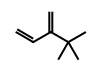
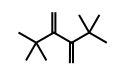
- 2,3-di-tert-butylbuta-1,3-diene behaves like a non-conjugated diene: the bulky groups twist the two C=C units out of plane.
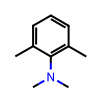
- N,N-dimethylaniline with two ortho methyl groups (2,6-dimethyl-N,N-dimethylaniline): the group is twisted, its lone pair can no longer delocalise into the ring, so it is more basic than N,N-dimethylaniline.
- Nitro group between two ortho methyls (in 2,6-dimethylnitrobenzene, or ortho-substituted nitrophenols) loses its -M effect.
Arrange the C-O bond length: (a) , (b) HCHO, (c) , (d) .
Show answer and solution
Bond order: HCHO 2, formate 1.5, carbonate 1.33, methanol 1. Higher bond order = shorter bond. Length: HCHO < formate < carbonate < methanol, i.e. (b) < (c) < (d) < (a).
Are these pairs resonance structures? (a) and drawn mirrored; (b) acetone and its enol ; (c) and .
Show answer and solution
(a) Same structure drawn twice: not two contributors. (b) No: the H moved, so they are tautomers (real, separate compounds in equilibrium). (c) Yes: only electrons moved.
Only electrons move. Never break a bond, never exceed an octet. Rank contributors: octets, then fewer charges, then charges on the right atoms. Equivalent contributors give the biggest stabilisation. Donors put negative charge, acceptors put positive charge, at ortho and para.