The five common resonance patterns
Resonance notes: The five common resonance patterns, explained step by step.
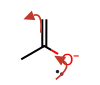
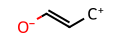
1. Lone pair next to a bond (allylic lone pair)
The lone pair forms a new bond and the old bond moves onto the far atom.

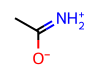


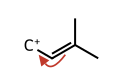
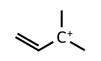
2. Positive charge next to a bond (allylic cation)
The bond moves towards the positive centre; the charge moves to the far end.


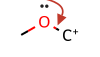
3. Lone pair next to a positive charge
The lone pair forms a bond to the cationic atom; every atom then has an octet.


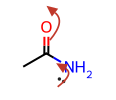
4. bond between atoms of different electronegativity
The electrons move onto the more electronegative atom.



5. Conjugated bonds in a ring
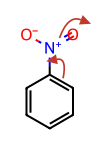
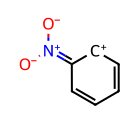
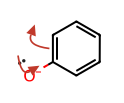
Move the bonds around the ring (benzene above). With a substituent, the charge appears at ortho and para positions.
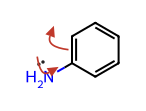
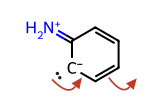
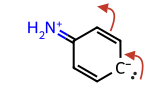
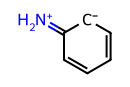
The lone pair pushes electron density into the ring and puts negative charge at the ortho and para positions. Aniline has five contributors in all: the two Kekule forms and the three charge-separated forms. Phenol and phenoxide behave the same way.
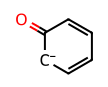
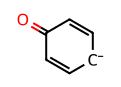
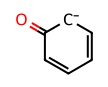
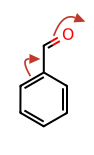
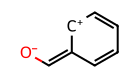
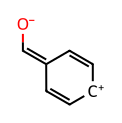
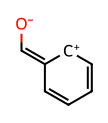
An electron-withdrawing group (CHO, , CN, COR) pulls density out of the ring and puts positive charge at ortho and para.