Resonance: practice set 1 of 10
Resonance questions: Rules for arrows
3 questions, each with the answer and a worked solution under it. Try each one before you open the answer.
1
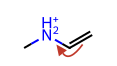
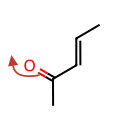
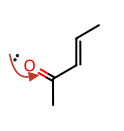
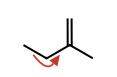
Which arrows break rule C-1 (never break a single bond) or C-2 (never exceed an octet)? Count all H atoms and lone pairs.




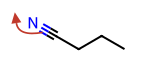

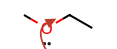
Show answer and solution
- C-2: N would have five bonds. 2. No violation. 3. C-2: carbon would get 10 electrons (no second arrow takes a pair away). 4. C-2: O would get 10 electrons. 5. C-2: carbon would get 10 electrons. 6. C-2: carbon gets 10 electrons. 7. C-1: a single bond is broken. 8. C-1. 9. No violation. 10. No violation (gives ). 11. C-2: carbon gets 10 electrons.
2
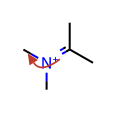
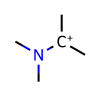
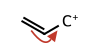
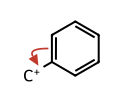
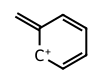
Draw the curved arrows that turn the first structure into the second in each pair: (1) benzene Kekule I to II (2) iminium ion to carbocation (3) allyl cation, charge moves to the other end (4) benzyl cation to the ortho-cation.
Show answer and solution



3
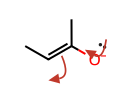
Draw the structure obtained by pushing these arrows (O lone pair down, C=C onto carbon), with formal charges.
Show answer and solution
The O lone pair makes C=O; the C=C pair becomes a lone pair on carbon. Result: the carbanion .
