Topic 4 of 8
Phenols and benzoic acids: positional effects
Acidic and Basic Strength notes: Phenols and benzoic acids: positional effects, explained step by step.
On this page
Covered in detail in chapter 17. Summary:
- Nitrophenols: p ( 7.2) o (7.2) > m (8.4) > phenol (10). o-Nitrophenol is held back by its intramolecular H-bond.
- Picric acid (2,4,6-trinitrophenol, 0.4) is about as strong as a mineral acid.
- Cresols: phenol > m > p o.
Ortho effect in benzoic acids
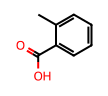
Almost any ortho substituent (even a donor such as ) makes benzoic acid stronger. The ortho group twists the COOH out of the ring plane. The ring can then no longer donate electron density into the COOH (steric inhibition of resonance), so the carboxylate is relatively more stable.
| Acid | |
|---|---|
| benzoic | 4.20 |
| o-toluic | 3.91 |
| m-toluic | 4.27 |
| p-toluic | 4.37 |
| o-nitrobenzoic | 2.17 |
| p-nitrobenzoic | 3.44 |
| m-nitrobenzoic | 3.45 |
| salicylic (o-OH) | 2.97 (intramolecular H-bond stabilises the anion) |
| p-hydroxybenzoic | 4.58 |
| p-methoxybenzoic | 4.47 |
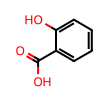
Salicylic acid
In salicylate the OH donates an H-bond to the group, stabilising the anion. That is why salicylic acid ( 2.97) is much stronger than its para isomer (4.58).