Tautomerism questions: Unsolved examples
3 questions, each with the answer and a worked solution under it. Try each one before you open the answer.
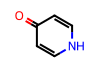
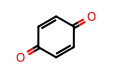
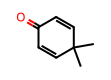
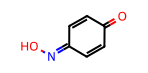
X = number of compounds that tautomerise to an aromatic product. Find X.




Show answer and solution
X = 4: (a) to 4-hydroxypyridine, (b) and (c) to phenol, (h) to p-nitrosophenol. (d) has no H to move, (g) is blocked by the quaternary carbon, (e) gives a simple enol, (f) would give an antiaromatic cyclobutadienol.
Which compound in each pair would be more extensively enolised?


Show answer and solution
(i) the ketone whose -H is not at a bridgehead (ii) cyclohexane-1,3-dione: the bicyclic dione cannot place a C=C at the bridgehead (Bredt) (iii) cyclohexa-2,4-dienone (its enol is phenol) (iv) the hydroxydione: its enol is a squaric-acid-type, conjugated, H-bonded system.
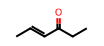
Z = number of D atoms exchanged on prolonged treatment of hex-4-en-3-one with /. Find Z.
Show answer and solution
Z = 6: the of the ethyl group (2) directly; through the dienolate the C6 methyl (3) and the C4-H (1).