Tautomerism questions: Exercise: single choice
22 questions, each with the answer and a worked solution under it. Try each one before you open the answer.
tautomers are:
- Astructural isomers
- Bconformational
- Cconfigurational
- Dgeometric.
Show answer and solution
(A).
mixed ethers are also called:
- Asymmetric
- Bunsymmetric
- Cdialkyl ethers
- Doxane.
Show answer and solution
(B).
number of H replaced by D (prolonged /):

- A3
- B6
- C8
- D10
Show answer and solution
(B) 6: the four -H exchange directly; through the dienolate the C=C can move into conjugation and back, so the two vinylic H exchange too.
total number of enols possible for pentane-2,4-dione?
- A1
- B2
- C3
- D4.
Show answer and solution
original (C) 3: the enol toward the central , the enol toward a terminal , and the di-enol.
and

Show answer and solution
(B) 7: C1 (3), C3 (1) and C5 (3) through the dienolate; the C4 H is never removed.
number of H replaced by D. Q5: (A) 3 (B) 7 (C) 8 (D) 6. Q6: (A) 3 (B) 7 (C) 8 (D) 1

Show answer and solution
original (A) 3: the enol becomes 2-methylcyclohexanone, whose C2-H (1) and C6-H (2) exchange. (The O-H also exchanges; the original question counts only C-H.)
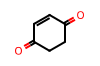
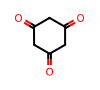
Which compound has the minimum enol content?




Show answer and solution
(A): (B), (C) and (D) all have enols that are phenols (aromatic).
Which compound cannot show keto-enol tautomerism?
Show answer and solution
(D): no -H.
Correct order of enol content:
- AIII > I > IV > II
- BIV > II > I > III
- CII > III > I > IV
- DI > III > II > IV
Show answer and solution
(A).
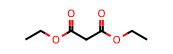
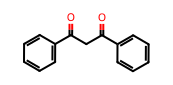
Correct relationship between the compounds below:

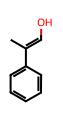
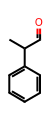
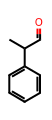

- AII and III are geometrical isomers
- BI and II are metamers
- CIII and IV are tautomers
- DI and IV are tautomers
Show answer and solution
(C): III (the aldehyde) and IV (its enol) are tautomers. I and IV are E/Z isomers of the enol; II and III are the same aldehyde drawn two ways.
Tautomerism is also known as:
- Aprototropy
- Bdynamic isomerism
- Ckryptomerism
- Dall of the above.
Show answer and solution
original (A). "Dynamic isomerism" is also a correct synonym, so (D) is defensible.
Maximum enol content is observed in:
Show answer and solution
(C).
Keto-enol tautomerism is observed in:


- A
- B
- Cthe ketone below
- D
Show answer and solution
(D): the others have no -H.
Keto-enol tautomerism is NOT observed in:
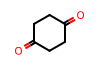

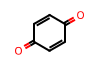

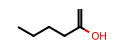


Show answer and solution
(C): no -H.
The tautomer of which compound can show geometrical isomerism?
- A
- B
- C
- Dcyclohexanone.
Show answer and solution
(B): has E and Z forms.
Which cannot show tautomerism?
Show answer and solution
(C): an allylic alcohol, not an enol.
Number of enols of pentan-2-one:
- A1
- B2
- C3
- D4
Show answer and solution
(C) 3: and the E and Z forms of .
Maximum enol content is found in:


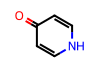
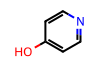
Show answer and solution
(C).
Which compound has negligible enol?
Show answer and solution
(A): its enol would be a cyclopentadienone-type ring (antiaromatic), so it stays 100 % keto.
Direction of equilibrium for reactions 1 and 2 (each written as keto form to its enol tautomer):
- Aforward, forward
- Bforward, backward
- Cbackward, forward
- Dbackward, backward
Show answer and solution
(B): phenol is aromatic; 4-pyridone is favoured in solution (it is also aromatic in its polar form and H-bonds well).
Number of H replaced by D when phloroglucinol (below) is treated with /:
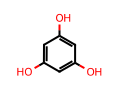
- A3
- B6
- C8
- D10.
Show answer and solution
(B) 6: the three O-H, and the three ring C-H through the triketo tautomer.
(A) isomerises with a trace of base into B. B is: (A) (B) (C) (D)
Show answer and solution
(C): through the enediol (Lobry de Bruyn type rearrangement).