Resonance questions: Relative stability of contributors
3 questions, each with the answer and a worked solution under it. Try each one before you open the answer.
Which contributor is most stable?
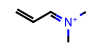
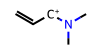

- A
- B
- C
Show answer and solution
A > B > C. (A) has the most bonds and every atom has an octet. (B) and (C) have an electron-deficient carbon; (C) puts it on a primary carbon and is the poorest.
For , , , CO and HCHO, judge each Lewis structure using four tests: (1) octet violation (2) like charges on adjacent atoms or large charge separation (coulombic problem) (3) too few bonds (4) formal charge on the wrong atom for its electronegativity.
Show answer and solution
- : and are the two good forms (negative charge on O is better, so the first is larger). Forms with or with + next to + are poor.
- : O=C=O is far better than (charge separation, + on O).
- CO: (all octets, triple bond) is the main form even though it puts + on O;:C=O: leaves carbon with six electrons.
- HCHO: is main; is a minor charge-separated form.
Twelve Lewis structures, (A)-(L), of formula are as drawn: (A) (B) (C) (D) (E) -type (F) (G) HN=C=NH (H) (I) (J) H-C=N=N-H with charges (K) with charges (L) H-N=N-C-H with charges. Which match: 1 no formal charges; 2 at least one N with (+); 3 at least one N with (-); 4 at least one C with (+); 5 at least one C with (-); 6 an electron-deficient N or C?
Show answer and solution
Answer key: 1. B, C, G. 2. A, D, E, F, H, J. 3. A, D, K, L. 4. K, L. 5. F, E, H, J. 6. B, I, K, L. (Method: for each atom, formal charge = valence electrons - lone-pair electrons - bonds. B is a carbene and G is a carbodiimide, both neutral; C is cyanamide.)


