Optical Isomerism (Stereochemistry) questions: Match the column
6 questions, each with the answer and a worked solution under it. Try each one before you open the answer.
Match List I with List II. (P) diastereomers (Q) meso compound (R) conformers (S) racemic mixture (T) enantiomers. (1) internal compensation (2) external compensation (3) react differently in a chiral medium (4) result from free rotation about a C-C bond (5) cis-trans isomerism. Codes P Q R S T:
- A5 2 4 1 3
- B3 1 4 2 5
- C3 2 5 5 4
- D5 1 4 2 3
Show answer and solution
(D): P-5 (cis/trans isomers are diastereomers), Q-1 (meso: one half cancels the other inside the molecule), R-4, S-2 (racemate: two enantiomers cancel each other), T-3 (enantiomers behave the same except toward chiral reagents or media).
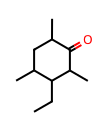
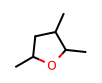
Column I (compound) with Column II: (P) 4 stereocentres (Q) 1 stereocentre (R) 3 stereocentres (S) shows geometrical isomerism.


Show answer and solution
A-S, B-P,S, C-S, D-R,S. (A) 2-methylcyclohexanol: 2 stereocentres, cis/trans. (B) the tetrasubstituted cyclohexanone: C2, C3, C4 and C6 are stereocentres (4), and the ring substituents show cis/trans. (C) 1,3-dimethylcyclohexane: 2 centres, cis/trans. (D) 2,3,5-trimethyloxolane: 3 centres, cis/trans. None has exactly 1 centre, so Q is unused.
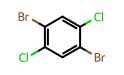
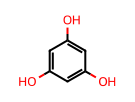
Column I with Column II: (P) axis present (Q) axis present (R) centre of symmetry (S) plane of symmetry.

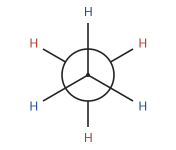
Show answer and solution
A-P,R,S; B-Q,S; C-P,Q,R,S; D-P,R,S. (A) and (D) are : a axis, a centre and the molecular plane. (B) with the three O-H pointing the same way round is : axis plus the ring plane. (C) staggered ethane is : , three , a centre and three planes.
Column I with Column II: (P) axis (Q) axis (R) plane of symmetry (S) centre of symmetry (T) axis.

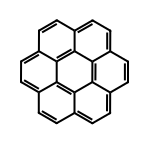
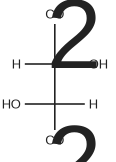
Show answer and solution
Answer key: A-P,R,S; B-P,Q,R,S; C-P,R; D-P. (A) : P, R, S. (B) planar coronene (): P, Q, R, S (no ). (C) trans-but-2-ene is also , exactly like (A), so it should be P, R, S; the original question leaves out S (Likely a key error). (D) the Fischer projection has OH on opposite sides, so it is chiral (R,R)/(S,S)-tartaric acid, not the meso form; it has only a axis: P.
Column I:
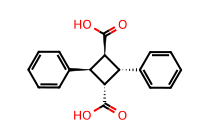
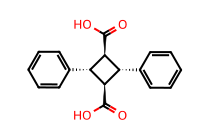
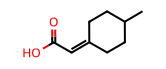
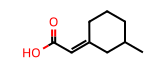
- Aplane of symmetry
- Bcentre of symmetry
- Cshows geometrical isomerism
- Dshows optical isomerism. Column II: (P) I (Q) II (R) III (S) IV, where I and II are 2,4-diphenylcyclobutane-1,3-dicarboxylic acids, III is (4-methylcyclohexylidene)acetic acid and IV is (3-methylcyclohexylidene)acetic acid.
Show answer and solution
A-Q, B-P, C-P,Q,S, D-R,S. I has a centre of symmetry; II has a mirror plane through the two Ph-bearing carbons. Both cyclobutanes show cis/trans isomerism. III has no stereocentre and no E/Z (the two ring arms are the same), but it is axially chiral like an allene: optical isomerism. IV has a stereocentre at C3 and the two ring arms differ, so it shows both E/Z and optical isomerism.
Column I (compound) with Column II: (P) 4 stereocentres (Q) 1 stereocentre (R) 3 stereocentres (S) shows geometrical isomerism. (The original question repeats MC26.2 here.)
Show answer and solution
A-S, B-P,S, C-S, D-R,S (same as MC26.2).