Topic 3 of 8
Three types in common use
Hyperconjugation notes: Three types in common use, explained step by step.
On this page
1. (C-H) with an empty p orbital: carbocations


More -H means more no-bond contributors and more spreading of the positive charge. Stability: , the same order as the inductive effect predicts.
2. (C-H) with a half-filled p orbital: radicals
| Bond broken | BDE (kcal/mol, approx.) | Radical formed | -H |
|---|---|---|---|
| 105 | methyl | 0 | |
| 101 | ethyl () | 3 | |
| 99 | isopropyl () | 6 | |
| 96.5 | tert-butyl () | 9 |
A smaller bond dissociation energy means the radical formed is more stable. So radical stability is .
3. (C-H) with a bond: alkenes and arenes
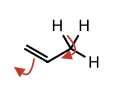
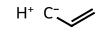
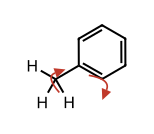
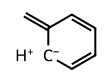
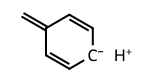
The C-H electrons enter the orbital of C=C. Propene has 3 such structures. Alkyl groups on a benzene ring do the same, putting extra electron density at ortho and para. This is why toluene reacts faster than benzene with electrophiles and gives ortho and para products.