Topic 1 of 8
Idea
Hyperconjugation notes: Idea, explained step by step.
Hyperconjugation is the delocalisation of the electrons of a bond (usually C-H) into a neighbouring empty or partly filled p orbital, or into a orbital. The C-H bond must be on the carbon next to the centre (the carbon). The resulting contributors show no bond between that C and H, so the effect is also called no-bond resonance or - conjugation. The name was given by Mulliken (1939-41). The H does not actually leave; it stays firmly held.
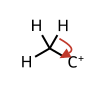
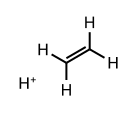
Conditions for hyperconjugation
- An (or ) centre: a C=C, a carbocation, or a carbon radical (also a benzene ring).
- At least one H on the carbon (the carbon directly joined to that centre).
- The C-H bond must be able to line up with the p orbital (parallel). At a bridgehead this can fail (see Bredt's rule).
The number of hyperconjugative structures = number of -H atoms.