Geometrical (cis-trans, E/Z) Isomerism questions: Unsolved examples
6 questions, each with the answer and a worked solution under it. Try each one before you open the answer.
Assign E or Z configuration to the following alkenes.
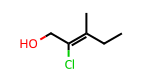
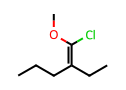
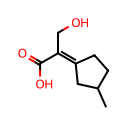
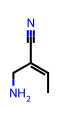
Show answer and solution
(a) Z: ethyl > methyl; Cl > ; ethyl and Cl are on the same side. (b) E: Cl (Z = 17) > O (Z = 8); propyl > ethyl; Cl and propyl are on opposite sides. (c) Z: the ring arm leading to the methyl-bearing carbon outranks the other arm (they tie at the first , then (C,C,H) beats (C,H,H)); > ; both on the same side. (d) E: > H; CN (N,N,N) > (N,H,H); opposite sides.
Assign E or Z configuration to each of the following compounds.

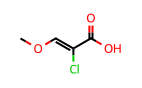
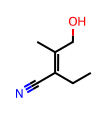
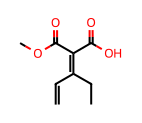
Show answer and solution
(a) Z: > ; > H; both on the same side. (b) Z: Cl > ; > H; same side. (c) E: CN > ethyl; > ; opposite sides. (d) Z: > (on the single-bonded O: C beats H); vinyl > ethyl; same side.
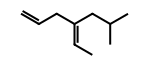
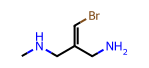
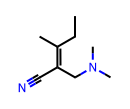
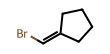
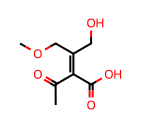
Which of the following E, Z designations are correct, and which are incorrect?
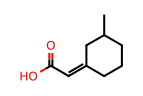
Show answer and solution
(a) Z: the ring arm leading to the methyl-bearing carbon is higher, and it is on the same side as . (b) correct (E): vs tie at the (C,H,H) and again at the next carbon (C,C,H each, counting the duplicate C of the double bond). One step further, the allyl branches give (C,H,H) from the carbon, while isobutyl gives only (H,H,H) from its methyls. So allyl is higher, and it is opposite to : E. (c) incorrect, it is E: > (on N: C beats H); Br > H; Br and are on opposite sides. (d) correct (E). (e) incorrect: the cyclopentylidene carbon carries two identical ring arms, so there is no E/Z at all. (f) correct (E): > ; (O,O,O) > (O,O,C).
Which member in each of the following sets ranks higher? (a) -H or (b) -Cl or (c) or (d) or (e) or -CH=O (f) or -CH=O
Show answer and solution
(a) (b) Cl (c) : at the first carbon (C,C,H) beats (C,H,H); Br is too far away to count (d) (e) CHO (f) CHO.
Rank the substituents in each of the following sets according to the sequence rules. (a) , -OH, -H, -Cl (b) , , , (c) , , -CN, (d) , -CCH, -CN,
Show answer and solution
(a) Cl > OH > > H (b) > > > (c) > > CN > (d) > CN > CCH > .
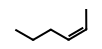
Write (E) or (Z) configuration of the following.




Show answer and solution
(a) Z (b) E (c) Z (d) E (e) Z.