Geometrical (cis-trans, E/Z) Isomerism questions: Worksheet 1: which show geometrical isomerism?
2 questions, each with the answer and a worked solution under it. Try each one before you open the answer.
Identify which of the compounds show geometrical isomerism.

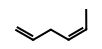


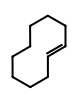

Show answer and solution
Yes: 1, 2, 4, 5, 8, 11, 12. No: 3 (both Cl on one carbon), 6 (one substituent), 7 (one ring substituent; the ring C=C in a 6-ring is cis only), 9, 10 (two methyls on one carbon).
Identify which of the compounds show geometrical isomerism.
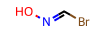


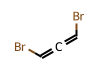
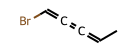

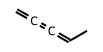
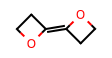
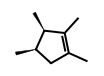


Show answer and solution
Yes: 13, 14, 15, 17, 20, 21, 22, 23. No: 16 (an allene with two C=C: optical isomers, not geometrical), 18 (butane, no double bond or ring), 19 (one end is ), 24 (linear alkyne). Notes: in 13 to 15 the lone pair (or H) on O or N acts as the second group, so C=N and C=O+ units behave like C=C. In 17 (three cumulated C=C, odd number) the end groups lie in one plane, so E/Z exists. In 20 each alkene carbon carries O and (2,2'-bioxetanylidene). 21 and 22 show cis/trans of the two ring methyls on carbons.