Topic 4 of 6
Acidity of substituted phenols
Applying I, M and Hyperconjugation Together notes: Acidity of substituted phenols, explained step by step.
A phenol is more acidic when its phenoxide ion is more stable. The negative charge of phenoxide spreads over O and the ortho and para carbons.
| Phenol | Main effect on the phenoxide | |
|---|---|---|
| phenol | 10.0 | reference |
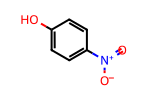
| p-nitrophenol | 7.2 | -M and -I: strong stabilisation |
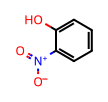
| o-nitrophenol | 7.2 | -M and -I, but intramolecular H-bond holds the O-H |
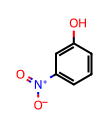
| m-nitrophenol | 8.4 | -I only |
| 2,4,6-trinitrophenol (picric acid) | 0.4 | three -M groups: as strong as a mineral acid |
| p-chlorophenol | 9.4 | -I (weak at para) |
| m-chlorophenol | 9.1 | -I stronger at meta than para |
| o-chlorophenol | 8.6 | -I strongest at ortho |
| m-cresol | 10.1 | +I only |
| p-cresol | 10.3 | +I and +H |
| o-cresol | 10.3 | +I and +H, nearest |
| m-methoxyphenol | 9.7 | -I only: more acidic than phenol |
| o-methoxyphenol | 10.0 | +M and strong -I roughly cancel |
| p-methoxyphenol | 10.2 | +M wins |
Orders to remember
- Nitrophenols: para ortho > meta > phenol. Ortho would be expected to be strongest (larger -I), but its intramolecular H-bond makes the O-H harder to ionise.
- Cresols: phenol > meta > para ortho.
- Methoxyphenols: meta > phenol ortho > para.
- Halophenols: ortho > meta > para > phenol (the -I effect falls with distance; +M of halogen is weak).