Substituted benzyl cations
Applying I, M and Hyperconjugation Together notes: Substituted benzyl cations, explained step by step.
Positive charge in the benzyl cation spreads to the ortho and para carbons of the ring. A substituent at ortho or para can talk to it by resonance; at meta it can act only by induction.
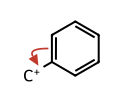
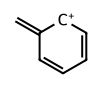
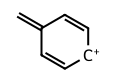
With a methoxy group
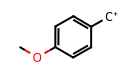
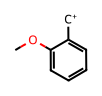
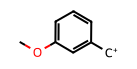
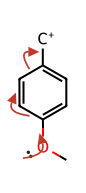
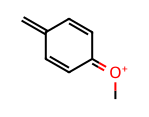
Stability: para > ortho > meta. The meta isomer is even less stable than the parent benzyl cation, because only -I acts there.
With a methyl group
Methyl stabilises by +I and hyperconjugation at ortho and para, and by +I only at meta. Order: ortho, para > meta. (Solvolysis data put para slightly ahead of ortho; many Indian textbooks rank ortho first on the argument that +I is strongest nearby. Confidence on the o/p order: likely para, but treat it as close.)
With a nitro group
withdraws by -I everywhere and by -M at ortho and para. At ortho and para the positive charge can even sit on the carbon next to the , which is very bad. Stability: meta > para > ortho (all three are less stable than benzyl cation itself).