Substituent effects: rate and orientation
Benzene notes: Substituent effects: rate and orientation, explained step by step.
The group already on the ring decides both how fast the next substitution goes and where it goes.
| Group type | Examples | Rate vs benzene | Orientation |
|---|---|---|---|
| strong activators (+M) | , , , , | much faster | ortho, para |
| moderate activators | , , | faster | ortho, para |
| weak activators (+I, hyperconjugation) | alkyl, aryl | slightly faster | ortho, para |
| halogens (-I > +M) | F, Cl, Br, I | slower | ortho, para |
| deactivators (-M, -I) | , , , , , , , , | slower | meta |
For an electron-donating group, attack at ortho or para gives an arenium ion in which one contributor puts the + charge on the carbon carrying the group; the group then stabilises it directly (lone pair donation or hyperconjugation). Meta attack never places + there. For an electron-withdrawing group, ortho/para attack puts + next to the already electron-poor group (very bad), so meta, the least bad, wins.
Halogens are the only common deactivating ortho/para directors. Their -I effect lowers the overall rate; their lone pair (+M) still stabilises the ortho/para arenium ions more than the meta one.

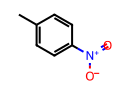
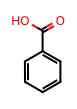
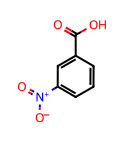
Statistics favour ortho (two positions), but steric hindrance favours para. Bulky groups (tert-butyl) give mostly para. Aniline in strong acid becomes (a meta director), so direct nitration of aniline gives a lot of meta product and oxidation; protect it as acetanilide first.