Topic 3 of 10
The main reactions
Benzene notes: The main reactions, explained step by step.
| Reaction | Reagents | Electrophile | Product |
|---|---|---|---|
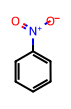
| nitration | conc. + conc. , below 50-60 C | (nitronium) | nitrobenzene |
| halogenation | or + or , dark | (as complex) | chloro/bromobenzene |
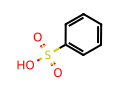
| sulfonation | fuming (oleum), or conc. on heating | (or ) | benzenesulfonic acid (reversible) |
| Friedel-Crafts alkylation | RCl + anhydrous | (or R-Cl-) | alkylbenzene |
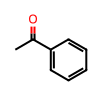
| Friedel-Crafts acylation | RCOCl (or anhydride) + | (acylium) | aryl ketone |

Friedel-Crafts limits
- Alkylation: the carbocation can rearrange (n-propyl chloride gives mainly isopropylbenzene). 2. Alkylation: the product is more reactive than benzene, so polyalkylation occurs; use excess benzene. 3. Neither works on strongly deactivated rings (, , , C=O) or on rings with /NHR/ (N binds ). 4. Aryl and vinyl halides cannot be used as the R-X. 5. Acylation needs more than one equivalent of (the ketone product complexes it) but stops cleanly after one substitution and never rearranges.
Making n-propylbenzene
Acylate first (propanoyl chloride, gives propiophenone), then reduce C=O to (Clemmensen or Wolff-Kishner). This avoids the rearrangement of direct alkylation.
Sulfonation is reversible
Heating benzenesulfonic acid with dilute aqueous acid removes . A sulfonic acid group can therefore be used as a temporary blocking group, for example to force a second group into the ortho position.