Topic 8 of 10
Fused rings and peripheral resonance
Aromaticity notes: Fused rings and peripheral resonance, explained step by step.
Huckel's rule is strictly for monocyclic systems. For fused rings it works well if we count only the perimeter: naphthalene (10 e), anthracene and phenanthrene (14 e), azulene (10 e).
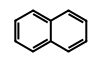
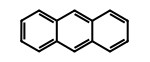
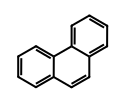
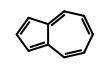
The resonance energy per ring falls (benzene 36, naphthalene 30.5 per ring), so fused arenes are more reactive than benzene. Phenanthrene adds at C9-C10, keeping two benzene rings (cost about kcal/mol of resonance energy).
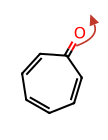
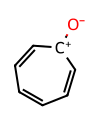
Dipolar contributors that create aromatic rings
- Tropone (cycloheptatrienone) is stable and very polar: its contributor has a 6 electron tropylium ring.
- Cyclopentadienone cannot be isolated: its contributor has a 4 electron (antiaromatic) ring.
- Azulene has a large dipole moment (about 1.0 D): electron density moves from the 7-ring (becoming tropylium-like) to the 5-ring (cyclopentadienide-like).
- Calicene (a three-membered ring joined by a C=C to a five-membered ring) is similar: a 3-ring cation and 5-ring anion.