Topic 6 of 10
Aromatic ions
Aromaticity notes: Aromatic ions, explained step by step.
Huckel's rule does not require a neutral species, nor that the number of electrons equals the number of ring atoms.


| Parent | Remove (cation) | Remove (radical) | Remove (anion) |
|---|---|---|---|
| cyclopentadiene | 4 e: antiaromatic | 5: not aromatic | 6: aromatic |
| cycloheptatriene | 6: aromatic | 7: not aromatic | 8: antiaromatic |
| cyclopropene | 2: aromatic | 3 | 4: antiaromatic |
| cyclononatetraene | 8: antiaromatic | 9 | 10: aromatic |
Consequences:
- Cyclopentadiene is unusually acidic for a hydrocarbon ( about 16, close to water). or Na metal converts it to sodium cyclopentadienide.
- Cycloheptatriene loses hydride: with it gives tropylium bromide, a salt that dissolves in water.
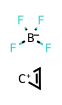
- 3-Chlorocyclopropene reacts with , precipitating AgCl and leaving the stable cyclopropenyl cation in solution.