Resonance questions: Worksheets 1 to 5: draw the contributors and the hybrid
6 questions, each with the answer and a worked solution under it. Try each one before you open the answer.
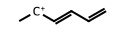
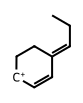
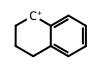
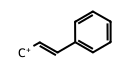
Draw the resonance hybrid and mark the carbons.




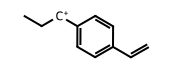
Show answer and solution
Mark every carbon that can carry the + in some contributor (push bonds toward the C+ one at a time): 1: the two allylic ends. 2: C1, C3, C5 of the dienyl unit. 3: the and the ortho and para ring carbons. 4: both ends. 5: C1, C3, C5. 6: the cationic carbon and the two carbons it reaches through the diene. 7: the ring cation carbon, the ring carbon across the C=C, and the side-chain carbon through the exocyclic C=C. 8: the benzylic carbon and the ortho and para ring carbons. 9: all four ring carbons, each . 10: the , the alkene carbon next to the ring, and the ortho and para ring carbons. 11: the benzylic carbon, the ortho ring carbons, the para carbon and the far vinyl .
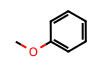
Draw the resonance structures and the hybrid.


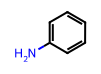

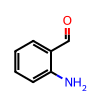
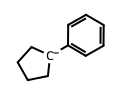


Show answer and solution
positions: 1 both ends. 2 both O. 3 N is ; ortho and para C are . 4 all five C. 5 N ; ortho and para carbons and, through the CHO, the carbonyl O . 6 the benzylic C and the ortho and para ring carbons. 7 C1, C3, C5. 8 all three O. 9 O ; ortho and para C .
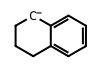
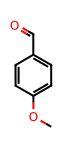
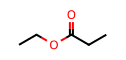
Draw the resonance structures and the hybrid.






Show answer and solution
1 Cl , ortho/para C (+M of Cl). 2 C1, C3, C5 . 3 N , O (amide). 4 both allylic ends. 5 the benzylic C and ortho/para ring C. 6 push-pull: OMe O , CHO O , ring carbons alternate. 7 ester: alkoxy O , C=O O . 8 O and ortho/para C . 9 OH O , C=O O .
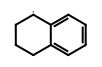
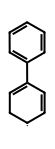
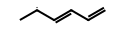
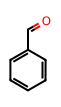
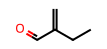
Draw the resonance structures and the hybrid.



Show answer and solution
Radicals (1-5): the odd electron is spread exactly like a charge would be: 1 all five C; 2 both allylic ends; 3 benzylic C and ortho/para ring C; 4 the dienyl carbons and, through the phenyl, its ortho/para carbons; 5 C1, C3, C5. Carbonyls (6-8): O ; carbonyl C and the carbon (7, 8) or the ortho/para ring carbons (6) .
Draw the resonance structures and the hybrid.


Show answer and solution
In each, the heteroatom lone pair makes a bond to the cationic carbon, so the heteroatom is and the carbon : 1 oxocarbenium 2 iminium 3 protonated aldehyde form 4 sulfonium (weaker, 3p-2p overlap) 5 the ring cation is shared by three ring carbons and the OH oxygen 6 the + is shared by C3, C5 and the ring O (through the C=C).
Rank the contributors in each set: (1) 1-methoxycyclohexene vs its /carbanion form (2) a 2-oxanyl cation vs its oxonium form (3) acetic acid: neutral vs vs (4) aniline: neutral vs ortho vs para charge-separated (5) : O=C=O vs vs vs (6) carbamic acid : neutral, , , (7) the 1-methylcyclohexenyl cation, 3 form vs 2 form (8) cyclohexenone: neutral vs vs the -carbocation form.
Show answer and solution
Answer key: 1. I > II 2. II > I 3. I > III > II 4. I > II > III 5. I > II > III > IV 6. I > III > II > IV 7. I > II 8. I > II > III. Rules used: more bonds and full octets first; then fewer charges; then negative charge on the more electronegative atom.