Topic 2 of 16
Chirality
Optical Isomerism (Stereochemistry) notes: Chirality, explained step by step.
On this page
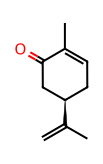
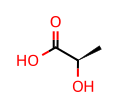
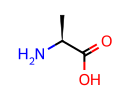
A molecule is chiral if it is not superimposable on its mirror image (like a hand). A chiral molecule and its mirror image are enantiomers. An achiral molecule is superimposable on its mirror image.
Chirality centre (stereocentre)
A carbon atom bonded to four different groups (an asymmetric carbon, often marked C*). Look at the whole group, not just the first atom: in 3-methylhexane C3 carries H, , and and is a stereocentre.
Quick checks
- Carbons with two or more H (, ) are never stereocentres.
- and carbons are never tetrahedral stereocentres.
- In a ring, go round both ways from the carbon: if the two paths are identical, it is not a stereocentre (C1 of methylcyclohexane is not; C1 and C3 of 1,3-dimethylcyclohexane are).
Molecules that are chiral without a stereocentre
- Allenes (a b): the two ends are at 90, so the molecule has a chiral axis.
- Spiranes such as substituted spiro[3.3]heptanes behave the same way.
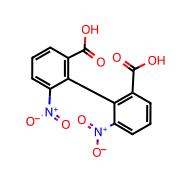
- Biphenyls with bulky ortho groups: rotation about the ring-ring bond is blocked (atropisomers).
- Helicenes; trans-cyclooctene.