Optical Isomerism (Stereochemistry) questions: Subjective questions
10 questions, each with the answer and a worked solution under it. Try each one before you open the answer.
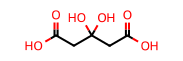
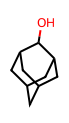
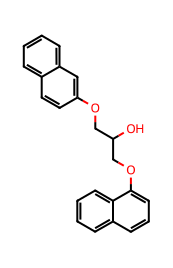
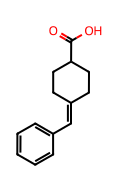
Are these compounds chiral? Justify with diagrams.

Show answer and solution
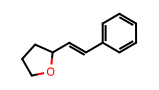
Test each for a plane of symmetry. (i) Not chiral: the central carbon carries two OH groups and two identical arms. Redrawn with the two arms side by side, the plane through the central carbon and its two OH groups is a mirror plane. (ii) Chiral: 1,6-dioxaspiro[4.4]nonane. The two rings are perpendicular and neither ring plane is a mirror plane for the other ring. (iii) Not chiral: the hydroxyadamantane has a mirror plane through C-OH. (iv) Chiral: the two naphthalene units are joined at different positions (one 2-naphthyl, one 1-naphthyl), so the plane through the CHOH carbon is not a mirror plane. (v) Chiral: the sits on a tetrahedral carbon, so the ring is not a mirror plane, and the =CHPh group puts Ph on one side and H on the other, so the perpendicular plane fails too (axial-type chirality, like an allene).
What makes a molecule chiral? Give three examples of different types of chirality. Say whether each compound below is chiral.


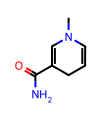

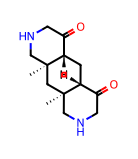
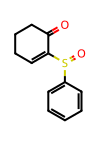
Show answer and solution
A molecule is chiral when it cannot be superimposed on its mirror image, in practice when it has no plane (or centre, or axis) of symmetry. Types: a stereogenic atom (C, N, P, S with four different groups, e.g. (R)-butan-2-ol); axial chirality (an allene such as penta-2,3-diene, or a blocked biaryl); helical or planar chirality (hexahelicene); spiro compounds. (i) The spirophosphonium cation is chiral: P itself is not a stereocentre, but the two rings are perpendicular and the N-Me groups remove every mirror plane. (ii) The bicyclic imine is chiral: the C=N at one ring junction and the tetrahedral CH at the other leave no plane. (iii) The 1,4-dihydropyridine is not chiral: conjugation makes the ring nearly planar and the ring plane reflects the two H of the onto each other. (iv) The alkylidenecyclohexane allene is not chiral: one end of the allene is a ring with two identical arms, so the plane through the ring perpendicular to its mean plane, containing the methyl, is a mirror plane. (v) The tricyclic bis-lactam (two methyls up, two H down at the ring fusions) is not chiral: a vertical mirror plane runs down the middle of the central ring. (vi) The sulfoxide is chiral: sulfur is tetrahedral (O, lone pair, phenyl, ring), with four different "groups".
Discuss the stereochemistry (number of diastereomers, chirality) of these four bicyclic ethers: a tetrahydroisobenzofuran with the C=C at the ring junction, the same with a second ring C=C, and two partly saturated isomers with the C=C away from the junction.


Show answer and solution
1st and 2nd: the C=C is at the ring junction, so there are no stereocentres. One compound each, with a mirror plane; not chiral. 3rd (C=C placed symmetrically in the six-membered ring): two junction stereocentres. Two diastereomers: cis junction (has a mirror plane, meso, not chiral) and trans junction (only a axis, chiral, a pair). 4th (C=C placed unsymmetrically): no symmetry at all. Two diastereomers (cis and trans junction), and both are chiral, so four stereoisomers.
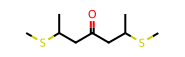
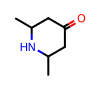
Discuss the stereochemistry of these compounds, using clear diagrams: (i) 2-methylcyclobutyl ethyl carbamate, (ii) norbornan-7-ol, (iii) 2-styryltetrahydrofuran, (iv) 2,6-bis(methylthio)heptan-4-one, (v) 2,6-dimethylpiperidin-4-one.
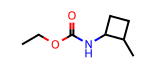

Show answer and solution
(i) Two stereocentres, no symmetry: cis and trans diastereomers, both chiral (4 stereoisomers). (ii) One compound, not chiral: a mirror plane passes through C7 and its OH and through the middle of the C2-C3 and C5-C6 bonds. (iii) An E/Z alkene and one stereocentre: two diastereomers (E and Z), each chiral (4 stereoisomers). (iv) Two equivalent stereocentres: syn (meso, not chiral) and anti (chiral pair). (v) Same pattern as (iv): cis (meso) and trans (chiral pair).
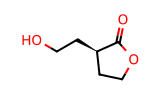
This lactone, 3-(2-hydroxyethyl)oxolan-2-one, racemises in base. Why?
Show answer and solution
The side-chain is the same as the ring arm . In base the free alkoxide attacks the lactone C=O and forms a tetrahedral intermediate with two identical five-membered rings: it has a mirror plane. When this intermediate collapses, either ring oxygen can leave. Loss of one gives back the starting lactone; loss of the other gives its mirror image. So trans-esterification interconverts the enantiomers, without touching the C-H at the stereocentre.
How many diastereomers does inositol have, and how many are meso?
Show answer and solution
Same as U26.12: 8 diastereomers (9 stereoisomers), 7 meso; only chiro-inositol is chiral.
What is meant by a symmetry operation in terms of symmetry elements? What is the order of a symmetry operation? Show the symmetry operations of chair cyclohexane.
Show answer and solution
A symmetry operation is a movement (rotation, reflection, inversion, or rotation followed by reflection) that turns the molecule into a copy that cannot be told apart from the original, without breaking or bending anything. The point, line or plane about which it is done is the symmetry element. The order of a group of operations is the number of distinct operations that each bring the molecule back to an equivalent position, identity included. Chair cyclohexane belongs to , order 12: , , , , , .
How many stereoisomers are possible for a molecule , where A* is an asymmetric group? Are all of them optically active?
Show answer and solution
Each A* is R or S. Distinct combinations: 4, 4 (a chiral pair), 3, 3 (a chiral pair), and 22 (achiral, meso). So 5 stereoisomers, 4 optically active and 1 meso. (Same answer as Q26.20.)
If Cabcd were square planar, how many stereoisomers would there be, and how are they related? If each square-planar form became a pyramid, how many stereoisomers then?
Show answer and solution
Square planar: fix a; the group trans to it can be b, c or d, so 3 stereoisomers. All are planar, so none is chiral; they are diastereomers. Pyramidal (C at the apex): each of the 3 base arrangements loses its mirror plane and becomes a pair of enantiomers: 6 stereoisomers (3 pairs).
Ephedrine: (a) How many stereoisomers? (b) Configuration of each asymmetric centre in the active isomer.
Show answer and solution
Same as U26.10: (a) 4 (two asymmetric centres). (b) (1R,2S).