Nomenclature of Polyfunctional Compounds questions: Solved examples
11 questions, each with the answer and a worked solution under it. Try each one before you open the answer.
Which suffix names ? Which suffix names each compound below?
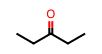
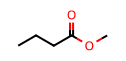
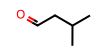
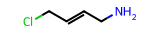


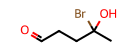

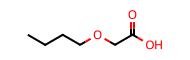
Show answer and solution
: -ol (alcohol outranks amine): 3-aminopropan-1-ol. (a) -one (b) -oate (c) -al (d) -amine (e) -ol (f) -ol (g) -al (h) -one (i) -oic acid.
Name the parent chain of each compound.
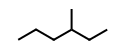
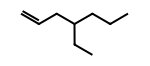
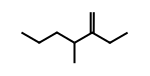
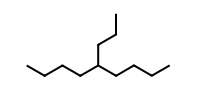
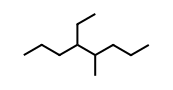
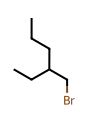
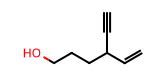
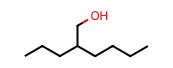
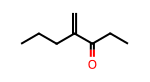
Show answer and solution
(1) hexane (2) heptene (3) hexene: the chain must hold the C=C (4) nonane (5) octane (6) hexane: the is a substituent (7) hexene: the chain holds the C-OH carbon; alkene and alkyne tie, and the double bond is preferred (8) hexane (2-propylhexan-1-ol) (9) pentene (pent-1-en-3-one with a 2-propyl group).
Identify the principal group, the parent chain, and the substituents.
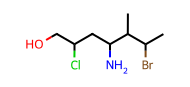
Show answer and solution
OH outranks , so OH is the principal group. Parent: the seven-carbon chain that contains the C-OH. Substituents: bromo, amino, chloro, methyl. Name: 4-amino-6-bromo-2-chloro-5-methylheptan-1-ol.
Name each compound (principal group as suffix, the rest as prefixes).
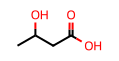
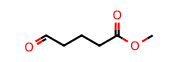
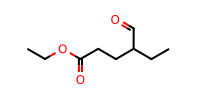
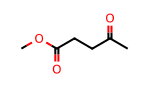
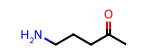
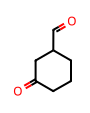
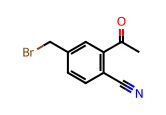
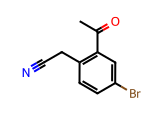
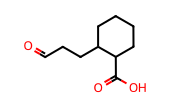
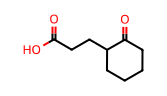
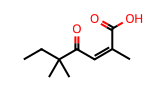
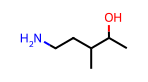
Show answer and solution
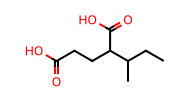
(a) 3-hydroxybutanoic acid (b) methyl 5-oxopentanoate (c) ethyl 4-formylhexanoate (d) methyl 4-oxopentanoate (an ester with a ketone as oxo prefix) (e) 5-aminopentan-2-one (f) 3-oxocyclohexane-1-carbaldehyde (g) 2-acetyl-4-(bromomethyl)benzonitrile (h) 2-(2-acetyl-4-bromophenyl)acetonitrile (i) 2-(3-oxopropyl)cyclohexane-1-carboxylic acid (j) 3-(2-oxocyclohexyl)propanoic acid (k) (E)-2,5,5-trimethyl-4-oxohept-2-enoic acid (l) 5-amino-3-methylpentan-2-ol (m) 2-(1-methylpropyl)pentanedioic acid.
Name these compounds with special suffixes.
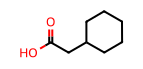
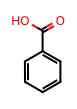
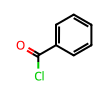
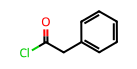
Show answer and solution
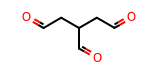
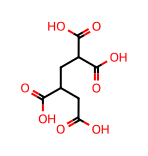
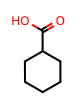
(a) propane-1,2,3-tricarbaldehyde: three CHO on a chain, their carbons are not counted in the root (b) butane-1,1,3,4-tetracarboxylic acid (c) cyclohexanecarboxylic acid: COOH directly on a ring (d) 2-cyclohexylethanoic acid (e) benzenecarboxylic acid (benzoic acid) (f) benzenecarbonyl chloride (benzoyl chloride) (g) 2-phenylethanoyl chloride: COCl not on the ring, so the ring is a phenyl prefix.
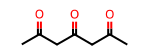
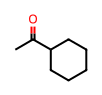
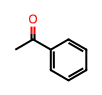
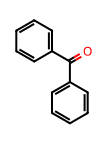
Name the ketones.
Show answer and solution
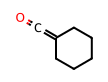
(a) heptane-2,4,6-trione (b) 1-cyclohexylethanone (c) 1-phenylethanone (d) diphenylmethanone (e) cyclohexylidenemethanone. The ketone carbon is always part of the parent chain.
Name the ring compounds.
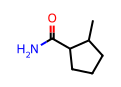
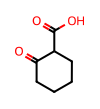
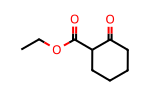
Show answer and solution
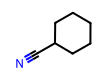
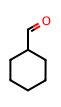
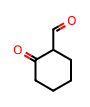
(a) cyclohexanecarbonitrile (b) cyclohexanecarbaldehyde (c) 2-oxocyclohexane-1-carbaldehyde (d) 2-methylcyclopentane-1-carboxamide (e) 2-oxocyclohexane-1-carboxylic acid (f) ethyl 2-oxocyclohexane-1-carboxylate.
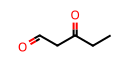
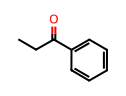
Give IUPAC names: (a) (b) (c) (d) . Draw (e) 3-oxopentanal and (f) 1-phenylpropan-1-one.
Show answer and solution
(a) 6-chlorohexan-3-one (b) 2,4-dimethylpentan-3-one (c) 3,3-dimethylbutanoic acid (d) pentane-2,4-dione.
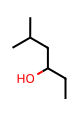
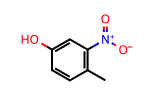
Name the four molecules (as drawn as ball-and-stick models).


Show answer and solution
(a) 5-methylhexan-3-ol; the model shows the (R) isomer (b) 3-methylcyclohexan-1-ol; the model shows the cis isomer (c) 1-cyclopentylethan-1-ol; the model shows (S) (d) 4-methyl-3-nitrophenol.
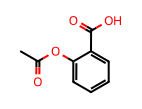
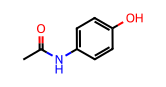
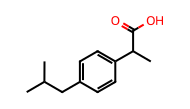
Identify the functional groups in aspirin, Tylenol (paracetamol) and Advil (ibuprofen).
Show answer and solution
All three are aromatic. Aspirin: carboxylic acid and ester. Paracetamol: phenol OH (the original question says "alcohol") and amide. Ibuprofen: carboxylic acid and alkyl groups.
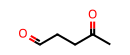
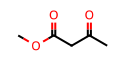
Name these compounds where a ketone or alcohol is a prefix or the principal group.
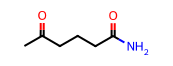
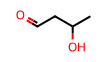
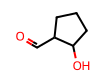
Show answer and solution
(a) 4-oxopentanal (b) methyl 3-oxobutanoate (c) 5-oxohexanamide (d) 3-hydroxybutanal (e) 2-hydroxycyclopentane-1-carbaldehyde.