Topic 3 of 7
More substituents: rules
Nomenclature of Aromatic Compounds notes: More substituents: rules, explained step by step, with 1 worked example.
Naming substituted benzenes
- If one group has a special base name (phenol, aniline, toluene, benzoic acid, benzaldehyde, anisole...), use it; that carbon is C1.
- Otherwise the principal group (chapter 11 priority) gives the suffix and its carbon is C1.
- Number the ring to give the lowest locant set to the other groups; if tied, the group first in alphabetical order gets the lower number.
- With no principal group (only prefixes), name as substituted benzene: lowest locants, then alphabetical order.
- o/m/p can be used only for two substituents. With three or more, use numbers.
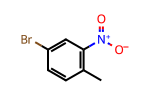
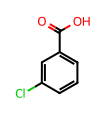
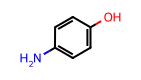
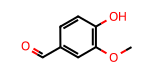
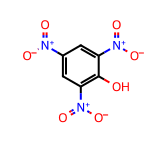
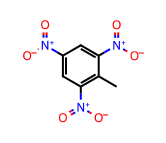
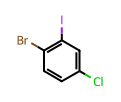
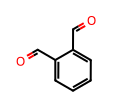
Worked example: Name the compound
Name the compound with at C1, meta to it and para to it.
Show answer and solution
Base name benzoic acid (COOH = C1). OH para = C4. meta = C3 (choose C3 over C5 so the set {3,4} is lowest). Prefixes alphabetical: hydroxy before nitro. 4-hydroxy-3-nitrobenzoic acid.