Bicyclic compounds
Nomenclature of Alkanes notes: Bicyclic compounds, explained step by step.
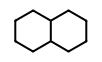
Two rings sharing two bridgehead carbons: bicyclo[a.b.c]alkane, where are the numbers of carbons in the three bridges between the bridgeheads (not counting the bridgeheads), and the alkane name counts all ring carbons. Number from one bridgehead, round the largest bridge, back through the next largest, and last along the smallest bridge.



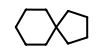
Spiro compounds share only one carbon: spiro[a.b]alkane with the ring carbons on each side of the spiro atom, e.g. spiro[4.5]decane.
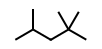
The octane number rates the anti-knock quality of petrol. Pure 2,2,4-trimethylpentane ("isooctane") is set at 100 and pure n-heptane at 0. A fuel with octane number 90 knocks like a 90:10 mixture of isooctane and n-heptane. Branched alkanes burn more smoothly (less knocking) than straight-chain alkanes, which is why refineries convert straight chains into branched ones (isomerisation, reforming).

- Missing the longest chain hidden around a corner.
- Using the sum of locants instead of the first point of difference.
- Alphabetising "dimethyl" under d (it goes under m) but forgetting that "(1,2-dimethylpropyl)" does go under d.
- Writing 2-ethyl...: an ethyl on C2 means the chain was chosen wrongly (the chain is longer through the ethyl).