Topic 5 of 6
Useful data
Glossary and Data notes: Useful data, explained step by step.
On this page
Pauling electronegativities
| Row | Values |
|---|---|
| 1 | H 2.1 |
| 2 | Li 1.0, Be 1.6, B 2.0, C 2.5, N 3.0, O 3.5, F 4.0 |
| 3 | Na 0.9, Mg 1.2, Al 1.5, Si 1.8, P 2.1, S 2.5, Cl 3.0 |
| others | K 0.8, Br 2.8, I 2.5 |
Water solubility of straight-chain alcohols
| Alcohol | Solubility (g/100 g water, about 20 C) |
|---|---|
| methanol, ethanol, propan-1-ol | miscible in all proportions |
| butan-1-ol | about 7.7 |
| pentan-1-ol | about 2.7 |
| hexan-1-ol | about 0.6 |
| heptan-1-ol | about 0.18 |
| octan-1-ol | about 0.05 |
| decan-1-ol | practically insoluble |
Correction
The original question's table lists decanol as "infinitely soluble". The trend runs the other way: each extra makes the alcohol less soluble, and decan-1-ol is practically insoluble in water.
Arrow conventions
| Arrow | Meaning |
|---|---|
| reaction (one step, or the overall change) | |
| equilibrium | |
| resonance (not a reaction) | |
| curly arrow, two barbs | movement of an electron pair |
| fish-hook, one barb | movement of one electron |
| reagent above, conditions below the arrow | reagent a, in solvent b, at t C, for h hours |
| (i) a, (ii) b on one arrow | treat with a first, then with b |
Acronyms you will meet


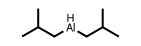
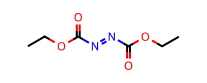
PCC = pyridinium chlorochromate, (oxidises 1 alcohols to aldehydes). NBS = N-bromosuccinimide. m-CPBA = meta-chloroperoxybenzoic acid. AIBN = azobisisobutyronitrile.
Common aprotic solvents
Toluene, dichloromethane, diethyl ether, THF, 1,4-dioxane, acetone, DMSO, DMF.