Topic 6 of 7
Properties of cis and trans isomers
Geometrical (cis-trans, E/Z) Isomerism notes: Properties of cis and trans isomers, explained step by step.
| Property | Usual trend | Reason |
|---|---|---|
| Dipole moment | cis > trans | trans bond dipoles cancel (often for symmetric trans) |
| Boiling point | cis > trans | larger dipole |
| Melting point | trans > cis | trans packs better in the crystal (more symmetric) |
| Stability | trans > cis | less steric strain (lower heat of hydrogenation and combustion) |
| Solubility in water | cis > trans | more polar |
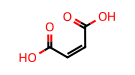
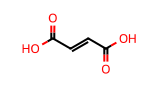
Maleic and fumaric acid
Maleic acid (cis-butenedioic acid) melts at 130 C, is more soluble, has 1.9 and forms a cyclic anhydride on heating; its monoanion is stabilised by an internal H-bond (which also makes high, 6.1). Fumaric acid (trans) melts at 287 C, is less soluble, has 3.0, 4.4, and does not form an anhydride without first isomerising. Fumaric acid is a normal metabolite in the citric acid cycle.
Addition chemistry links geometry and stereochemistry
Syn addition (for example dihydroxylation) to a cis alkene gives a meso product, to a trans alkene a racemate (d + l). Anti addition (for example ) reverses this: cis gives racemate, trans gives meso.