Applying I, M and Hyperconjugation Together questions: Unsolved examples
3 questions, each with the answer and a worked solution under it. Try each one before you open the answer.
Order of stability of the o, m, p carbanions with (i) (ii) (iii) on the ring (benzyl anions, listed as a = o, b = m, c = p).
Show answer and solution
(i) a > c > b (o > p > m) (ii) b > a > c (m > o > p) (iii) b > c > a (m > p > o).
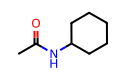
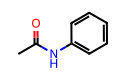
(a) Which O of methyl acetate, , has the greater electron density? (b) Which N is richer: 2-pyrroline (N next to C=C) or 3-pyrroline? (c) Which O is richer: the amide O of N-cyclohexylacetamide or of acetanilide?


Show answer and solution
(a) The carbonyl O (it receives the alkoxy O lone pair). (b) b > a: in 2-pyrroline the N lone pair is delocalised into the C=C. (c) a > b: in acetanilide the N lone pair is shared with the ring, so less of it reaches the C=O.
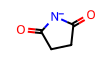
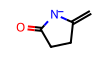
Which is more stable? (a) or (b) or (c) or (d) or the amidine anion (e) or (f) succinimide anion or its methylene analogue
Show answer and solution
(a) acetate (b) the second (-dicarbonyl) (c) the second (charge next to C=O) (d) the amidine-type anion (e) the first (enolate, charge onto O) (f) a: the charge spreads onto two C=O oxygens.