Applying I, M and Hyperconjugation Together questions: Solved examples
7 questions, each with the answer and a worked solution under it. Try each one before you open the answer.
Order of stability of the o-, m- and p-nitrobenzyl cations.
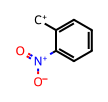
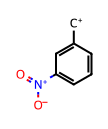
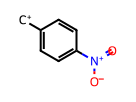
Show answer and solution
II > III > I. At ortho and para the nitro group withdraws by -I and -M; at meta only by -I. The -I effect is strongest at ortho.
Order of stability of the o-, m- and p-methylbenzyl cations.


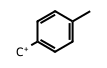
Show answer and solution
Answer key: I > III > II: +I and +H act at ortho and para, only +I at meta, and +I is strongest nearby. (Solvolysis data put para a little ahead of ortho; both are well above meta.)
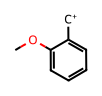
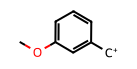
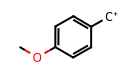
Order of stability of the o-, m- and p-methoxybenzyl cations.
Show answer and solution
III > I > II. +M of OMe stabilises at ortho and para; its -I is larger at ortho; at meta only -I acts.
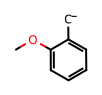
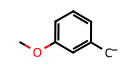
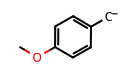
Order of stability of the o-, m- and p-methoxybenzyl carbanions.
Show answer and solution
II > I > III. For an anion, +M destabilises (at o and p) and -I stabilises (strongest at o). Meta feels only the stabilising -I.
Order of acidity of o-, m- and p-nitrophenol.
Show answer and solution
Expected from the phenoxide ions: o > p > m. Found: p > o > m > phenol, because intramolecular H-bonding in o-nitrophenol holds the O-H.
Order of acidity of o-, m- and p-cresol.
Show answer and solution
Phenol > m > p > o. Methyl destabilises the phenoxide by +I (all positions, strongest at o) and +H (o and p only).
Order of acidity of o-, m- and p-methoxyphenol.
Show answer and solution
m > o > p. At meta only -I acts (acid strengthening); at para +M wins; at ortho the larger -I partly offsets +M.