Which structural features are possible?
Double Bond Equivalent (DBE) notes: Which structural features are possible?, explained step by step, with 3 worked examples.
has DBE . Which is impossible: (A) 2 triple bonds, (B) 1 ring + 1 triple bond, (C) 2 rings + 1 C=C, (D) 2 C=C + 1 ring?
Show answer and solution
Two triple bonds need DBE 4. So (A) is impossible; (B), (C), (D) all give DBE 3. Natural terpenes such as limonene (2 C=C + 1 ring) and -pinene (2 rings + 1 C=C) are real examples.
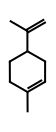

Which formula can be a saturated monocyclic compound: , , , ?
Show answer and solution
A saturated monocycle needs DBE 1. : 4. : 0. : , e.g. azetidine or N-methylaziridine. : 0. Answer: .
A natural product is found by hydrogenation to contain exactly one bond. How many rings does it have?
Show answer and solution
DBE . One unit is the bond, so the other is a ring: 1 ring.
A formula that gives a fractional DBE is not a neutral closed-shell molecule. gives 5.5: it must be a radical or an ion (benzoate is , DBE 5 after adding one H to make benzoic acid ).
| Compound | Formula | DBE |
|---|---|---|
| anthracene | 10 | |
| phenanthrene | 10 | |
| diphenylmethane | 8 | |
| 1,2-diphenylethane | 8 | |
| cholesterol | 5 (4 rings + 1 C=C) |