Aromaticity questions: Exercise: single choice
30 questions, each with the answer and a worked solution under it. Try each one before you open the answer.
In which pair does compound I have more resonance energy than compound II?



Show answer and solution
(C): the cyclopentadienyl anion is aromatic (6 e); the cyclopentenyl anion is only allylic. In (A), (B) and (D) compound II is the more stabilised one.
Which aromatic compound is the most stable?
- Athiophene
- Bfuran
- Cbenzene
- Dpyrrole.
Show answer and solution
(C) benzene.
Which is unstable at room temperature?
Show answer and solution
(C): borole has 4 e in a planar ring (antiaromatic).
Which of these would you expect to have significant resonance energy? (I) pyrrole (II) pyridine (III) benzene.


- AI
- BII
- CIII
- Dall of the above
- Enone of the above
Show answer and solution
(D).
Which is the single best representation of naphthalene?
- AI
- BII
- CIII
- DIV
Show answer and solution
(C): (I) is a 4-8 ring system, (II) tetralin, (IV) azulene; only (III) is naphthalene.
Which cyclisation(s) should occur with a decrease in -electron energy?
- AI
- BII
- CIII
- DIV
- Eall of the above
Show answer and solution
(B): only the cyclopropenyl cation is aromatic (2 e). (I) and (IV) give antiaromatic species; (III) gives a radical with 3 e.
Which statement about cyclooctatetraene is NOT true?
- Ait rapidly decolourises /
- Bit rapidly decolourises aqueous
- Cit readily adds hydrogen
- Dit is non-planar
- Eit is comparable to benzene in stability.
Show answer and solution
(E).
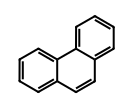
Benzene has a resonance energy of 152 kJ/mol and naphthalene 255 kJ/mol. Predict the positions taken by bromine when phenanthrene (numbered below, C1 to C10) adds .
- A1,2
- B1,4
- C3,4
- D7,8
- E9,10
Show answer and solution
(E) 9,10: adding there leaves two intact benzene rings (2 x 152 = 304 kJ/mol), more than the 255 kJ/mol of the naphthalene unit left by addition anywhere else.
Which of the following is not aromatic?
- Abenzene
- Bcyclooctatetraenyl dianion
- Ctropylium cation
- Dcyclopentadienyl cation
Show answer and solution
the original question's key says (B), but the COT dianion has 10 e and is aromatic. The non-aromatic (in fact antiaromatic) species is (D), the cyclopentadienyl cation.
Which statement is correct for cyclobutadiene (below)?

- Aits shape is square
- Bits shape is rectangular
- Cit is non-aromatic
- Dit is more stable than non-aromatic molecules.
Show answer and solution
(B): it distorts to a rectangle to localise its two bonds (it is antiaromatic, not merely non-aromatic).
Choose the aromatic nitrogen heterocycles.


- Ai
- Bii
- Ciii
- Di and ii
- Ei, ii and iii
Show answer and solution
(D) i and ii: (iii) has ring carbons, so its ring is not fully conjugated.
Which of the following is not aromatic?
Show answer and solution
(C): 7 e, an odd number cannot be .
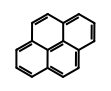
Which one of the following is aromatic?


Show answer and solution
(E) pyrene: 14 perimeter e. (A) antiaromatic, (B) has two carbons, (C) tub-shaped, (D) pentalene has 8 e (antiaromatic).
Aromatic properties of benzene are explained by:





- Athe aromatic sextet theory
- Bresonance theory
- Cmolecular orbital theory
- Dall of these.
Show answer and solution
(D).
An aromatic compound should have electrons, where n cannot be:
- A1/2
- B3
- C2
- D1.
Show answer and solution
(A): n is a whole number.
Which reaction will NOT proceed?
Show answer and solution
(D): S1 would need the antiaromatic cyclopentadienyl cation.
Which statement about the cyclopentadienyl radical is correct?
- Ait is aromatic
- Bit is not aromatic
- Cit obeys Huckel's rule
- Dit undergoes reactions typical of benzene
- Eit has a closed shell of 6 electrons
Show answer and solution
(B): 5 e.
Which would you expect to be aromatic?


- AI
- BII
- CIII
- DIV
- EV
Show answer and solution
(E) V (tropylium, 6 e).
Which would you expect to be aromatic?
- AI
- BII
- CIII
- DIV
- Enone of these
Show answer and solution
(B) II.
Which compound would you NOT expect to be aromatic?
- AI
- BII
- CIII
- DIV
- EV
Show answer and solution
(E) V: the borole has only 4 e (B has an empty p orbital).
Which annulene would you NOT expect to be aromatic?
- A[6]-annulene
- B[14]-annulene
- C[16]-annulene
- D[18]-annulene
- E[22]-annulene.
Show answer and solution
(C): 16 = 4n.
Which would you expect to be aromatic?
- AI
- BII
- CIII
- DIV
- Enone of these
Show answer and solution
(A) cyclopropenyl cation (2 e).
Which structure would be aromatic?


- AI
- BII
- CIII
- DIV
- EV
Show answer and solution
(B): the cyclooctatetraene dianion has 10 e.
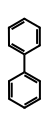
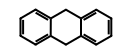
Compare the resonance energy of (a), (b), (c).


- Ac > a > b
- Bb > a > c
- Ca > b > c
- Da > c > b
Show answer and solution
(D): two benzene rings each (a, c) beat one naphthalene (72 vs 61 kcal/mol); biphenyl gains a little extra conjugation.
In the MO model of benzene, how many electrons are delocalised about the ring?
- A2
- B3
- C4
- D5
- E6.
Show answer and solution
(E) 6.
In the MO model of benzene, how many electrons are in bonding MOs?
- A6
- B5
- C4
- D3
- E2.
Show answer and solution
(A) 6.
Compare the stability of the carbocations formed when these iodides react with .
- Aa > b > c
- Ba > c > b
- Cb > c > a
- Db > a > c
Show answer and solution
(A): (a) gives the aromatic pyrylium ion; (b) a pentadienyl-type cation; (c) an allylic cation.
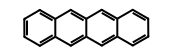
How many of these are aromatic?


- A,
- B,
- C,
- Dbelow;
- Eall of the above.
Show answer and solution
(E) all four (tetracene 18 e; the cyclobutadiene dication, pyridinium and tropylium each have ).
Which pair shows the correct order of stability?
- Acyclopropenyl cation > cyclopropenyl anion
- Btropylium cation < cycloheptatrienyl anion
- Ccyclopentadienyl cation > cyclopentadienyl anion
- Dall are correct
Show answer and solution
(A): the cation is aromatic, the anion antiaromatic. (B) and (C) are reversed.
Which member of each pair is more readily deprotonated?
- Acyclopentadiene > benzene
- Bcycloheptatriene < cyclooctatetraene
- Ccyclopentadiene > cyclopropene
- Dall are correct
Show answer and solution
Answer key (C). (A) is also true (benzene about 43, cyclopentadiene about 16); (C) is the clearest case, since cyclopentadiene gives an aromatic anion and cyclopropene an antiaromatic one. (B) is wrong: cycloheptatriene's anion is antiaromatic and COT has no C-H at all.