Acidic and Basic Strength questions: Solved examples: which proton is more acidic?
13 questions, each with the answer and a worked solution under it. Try each one before you open the answer.
For each, remove each marked proton in turn, draw the two conjugate bases, and ask which is more stable.
In each reaction, label the acid, the base, the conjugate base and the conjugate acid.


Show answer and solution
(1) (acid) + (base) (conjugate base) + (conjugate acid). (2) (acid) + (base) (conjugate base) + (conjugate acid). The acid loses to become its conjugate base; the base gains to become its conjugate acid.
Order HF, HCl, HBr, HI by acid strength, and their anions by base strength.
Show answer and solution
Acid strength HI > HBr > HCl > HF; base strength > > > . Down a group the anion is larger, its charge density lower, and it is more stable.
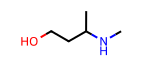
Compare the N-H and the O-H protons.
Show answer and solution
O-H. Both charges would be on second-row atoms; O is more electronegative, so the alkoxide is more stable than the amide ion.
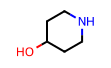
Compare (1) the O-H proton and (2) a terminal C-H proton of 2-methylpropan-1-ol; (3) a C-H and (4) an N-H of methylamine; (5) the S-H and (6) the O-H of 5-sulfanylpentan-1-ol; (7) the N-H and (8) the O-H of piperidin-4-ol.



Show answer and solution
(1) O-H > C-H (charge on O). (3)/(4): N-H > C-H (N is more electronegative). (5)/(6): S-H is more acidic (S is larger; is more stable than ). (7)/(8): O-H > N-H.
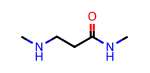
Compare the amine N-H and the amide N-H.
Show answer and solution
The amide N-H. Its conjugate base spreads the charge over N and O by resonance; the amine anion has the charge stuck on N.
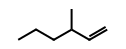
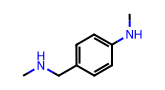
Compare the marked protons: (1) the allylic C-H and (2) a C-H one carbon further along in the alkene below; (3) the two N-H protons (aryl N-H vs alkyl N-H) of the diamine below; (4) the and a vinylic C-H of cyclopentadiene.

Show answer and solution
(1) The allylic H: its anion is resonance stabilised. (3) The N-H on the aryl N (aniline type): its anion is delocalised into the ring. (4) The H: its anion is the aromatic cyclopentadienide.
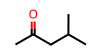
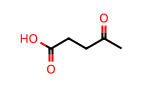
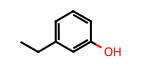
Compare the marked protons: (1) the C-H next to C=O and (2) a C-H further away in 4-methylpentan-2-one; (3) the C-H next to the ketone and the COOH O-H in 4-oxopentanoic acid; (4) the phenol O-H and the benzylic C-H of 3-ethylphenol.
Show answer and solution
(1) The C-H next to C=O: the enolate puts charge on O. (3) The O-H of COOH: charge on O shared over two O atoms beats a carbanion even if it is an enolate. (4) The phenol O-H.
Which is more acidic: acetic acid or trichloroacetic acid?
Show answer and solution
Trichloroacetic acid ( 0.65 vs 4.76). Both anions have charge on O and both are resonance stabilised, so induction decides: three Cl atoms withdraw electron density and stabilise .
Compare the two O-H protons; then the two N-H protons; then the two O-H protons of two diols.
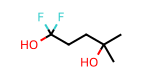
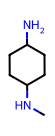
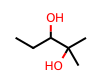
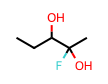
Show answer and solution
(a) The OH next to the : the F atoms stabilise the alkoxide by -I; the other alkoxide is destabilised by two methyls (+I). (b) Answer key: the N-H of the group (a primary amide ion is less destabilised by alkyl donation than a secondary one). (c) The secondary OH; the tertiary alkoxide is destabilised by more alkyl groups. (d) The OH on the carbon that carries F (original: conjugate base 2 is more stable): F stabilises the nearby alkoxide.
Compare the vinylic C-H and the alkynyl C-H of hept-1-en-6-yne; then and .
Show answer and solution
The alkyne C-H: an carbanion (50% s character) is more stable than an one. ( about 25) is more acidic than (36) even though N is more electronegative: here the orbital factor wins.
Compare the COOH proton with the O-H next to the CHF group.
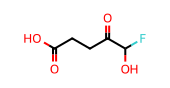
Show answer and solution
The COOH proton. Both charges are on O. The carboxylate is resonance stabilised; the other alkoxide only gets inductive help from F. Resonance beats induction.
In each compound, which of the two marked protons is more acidic?

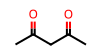
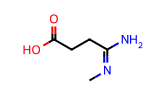

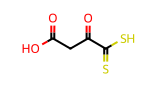
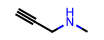
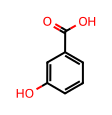
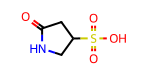
Show answer and solution
(i) O-H (ii) the central (charge spread over two C=O) (iii) the COOH (iv) the C-H: its anion is delocalised onto N (v) the S-H of the dithioacid: the charge sits on large S atoms and is delocalised over two S (vi) the alkyne C-H: carbanion vs N anion (vii) the COOH (viii) the .
Which is more acidic? (i) HCl / HBr (ii) / (iii) / (iv) ethyne / cis-ethene (v) propan-2-ol / tert-butanol (vi) propan-2-ol / 1,1,1,3,3,3-hexachloropropan-2-ol
Show answer and solution
(i) HBr (ii) (iii) (iv) ethyne (v) propan-2-ol (vi) the hexachloro alcohol.