Basic Organic Chemistry: Reagents and Curly Arrows questions: Solved examples
7 questions, each with the answer and a worked solution under it. Try each one before you open the answer.
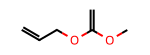
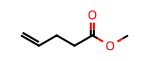
Use curly arrows to explain: (a) (b) the rearrangement of allyl vinyl ether (methoxy-substituted) to a -unsaturated ester (c) the cyclisation of a cation onto two C=C bonds to give a tetracyclic cation.
Show answer and solution
(a) S2. Arrow 1: lone pair on C of cyanide the C of . Arrow 2: the C-I bond I. Iodide leaves as the new bond forms. (b) Claisen [3,3] rearrangement, one concerted step. Three arrows go round a six-atom ring: O lone pair/C=C new C=O; the O-allyl bond breaks; the allyl C=C moves to form the new C-C bond. It is usually drawn with electron pairs, though single-electron arrows can also describe it. (c) Cation- cyclisation. The nearest C=C attacks the cation, making a new ring and a new cation; the next C=C attacks that one. The new bonds form almost at the same time.
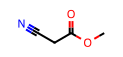
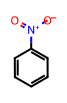
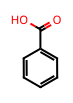
Place and on: (a) formaldehyde (b) methyl acetate (c) methyl cyanoacetate (d) benzene (e) toluene (f) anisole (g) chlorobenzene (h) nitrobenzene (i) benzoic acid.




Show answer and solution
(a) C , O . (b) carbonyl C , both O ; neighbouring atoms alternate in sign. (c) nitrile N and ester O ; nitrile C and carbonyl C . (d) none: the two Kekule forms are equivalent, the molecule is non-polar. (e), (f), (g): the substituent donates into the ring (hyperconjugation for , lone pair for OMe and Cl), so the ortho and para carbons are ; the ipso and meta carbons relatively . (h), (i): and COOH withdraw from the ring, so ortho and para carbons are .
A tetraene (four C=C, one trisubstituted at the end) with HBr gives a tricyclic bromide.
Show answer and solution
adds to the trisubstituted alkene to give the tertiary cation (Markovnikov). The next C=C attacks this cation and forms a ring and a new cation; this repeats down the chain (cation- cyclisation), making three rings. The final secondary cation is captured by . The same cascade in water ends with capture, giving an alcohol.
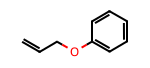
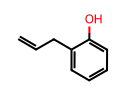
Explain: allyl phenyl ether 2-allylphenol on heating.
Show answer and solution
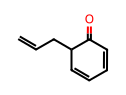
A concerted [3,3] shift: an O lone pair/ring pair makes C=O, the ring bond attacks the end of the allyl C=C, and the O-allyl bond breaks. This gives a non-aromatic cyclohexadienone. It tautomerises at once (H moves from the sp carbon to O) because the phenol is aromatic. No bonds are gained or lost overall.
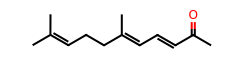
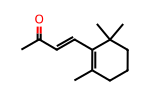
6,10-dimethylundeca-3,5,9-trien-2-one with gives -ionone. Explain the steps and why the other alkene isomers are minor.
Show answer and solution
(1) adds to the trisubstituted terminal C=C to give a tertiary cation. (2) The C=C at C5-C6 attacks it, closing the six-membered ring and giving a new tertiary cation. (3) Loss of from the ring carbon gives the tetrasubstituted ring C=C, conjugated with the side-chain C=C and C=O. The alternatives (-ionone with a trisubstituted ring alkene, or an exocyclic C=) are less substituted and not conjugated, so they are minor.
In each reaction, name the nucleophile and the electrophile: (a) + epoxide (b) + bromonium ion (c) + tert-butyl cation (d) phenoxide + .
Show answer and solution
Nucleophile first: (a) / epoxide C. (b) water / bromonium C. (c) water / carbocation. (d) phenoxide O / C of . The nucleophile is always the species at the tail of the first arrow.
Draw the arrows: (a) + isopropyl bromide isopropyl chloride + (b) tert-butyl bromide cation + , then + (c) + chlorocyclohexane cyclohexene + ROH + (d) 1-chloro-1,2-dimethylcyclohexane in water 1,2-dimethylcyclohexene + + .
Show answer and solution
(a) S2: Cl lone pair C; C-Br bond Br. (b) S1: C-Br bond Br (slow, gives the cation); then Cl lone pair C+. (c) E2: RO lone pair the -H; C-H bond new C=C; C-Cl bond Cl, all in one step. (d) E1: C-Cl Cl gives the tertiary cation; water's lone pair takes the -H; the C-H bond becomes the ring C=C (the more substituted alkene).