Nomenclature of Alkenes and Alkynes questions: Solved examples
10 questions, each with the answer and a worked solution under it. Try each one before you open the answer.
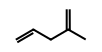
Name each compound.


Show answer and solution
(a) but-1-ene: number from the end nearer the C=C. (b) 4-methylpent-2-ene. (c) 2-methylpenta-1,4-diene: the C=C locants tie (1,4 from either end), so the methyl decides: 2 rather than 4. (The original question's condensed formula under this drawing, , does not match it; the drawing and the name are .)
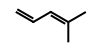
Name these dienes.



Show answer and solution
(a) hepta-2,4-diene (b) penta-1,3-diene (c) penta-1,4-diene (d) 4-methylpenta-1,3-diene.
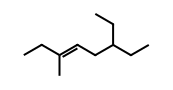
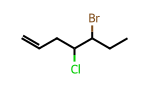
Name each compound.

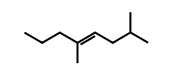
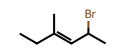

Show answer and solution
(a) 3-bromoprop-1-ene (b) 6-ethyl-3-methyloct-3-ene (c) 5-bromo-4-chlorohept-1-ene (d) 2,5-dimethyloct-4-ene, not 4,7-dimethyloct-4-ene (C=C locant ties at 4, then 2 < 4) (e) 2-bromo-4-methylhex-3-ene, not 5-bromo-3-methylhex-3-ene (2 < 3) (f) 4-pentoxybut-1-ene (4-(pentyloxy)but-1-ene).
Name the cycloalkenes.


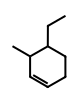
Show answer and solution
(a) cyclohexene: C=C is always C1-C2, no locant needed. (b) 3-ethylcyclopentene (c) 4,5-dimethylcyclohexene (d) 4-ethyl-3-methylcyclohexene.
Choose the right name in each pair.

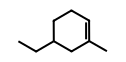
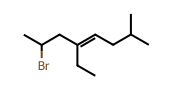
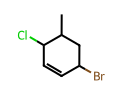
Show answer and solution
(a) 1,6-dichlorocyclohexene: the double bond takes C1-C2 and the first point of difference (1 vs 2) decides, not the sum of locants. (b) 5-ethyl-1-methylcyclohexene. (c) 2-bromo-4-ethyl-7-methyloct-4-ene, not 7-bromo-5-ethyl-2-methyloct-4-ene (4 < 5). (d) 6-bromo-3-chloro-4-methylcyclohexene, not 3-bromo-6-chloro-5-methyl (4 < 5 at the first difference).
Name each.


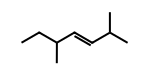
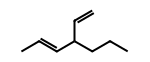
Show answer and solution
(a) 1-methylcyclohexene (b) cyclohexa-1,4-diene (c) 1,5-dimethylcyclopentene (the original question caption reads "dimethylene", a misprint) (d) 2,5-dimethylhept-3-ene (older style: 2,5-dimethyl-3-heptene) (e) 3-propylhexa-1,4-diene (older: 3-propyl-1,4-hexadiene).
How many carbons lie in the planar double-bond system (the two carbons and the four atoms on them) in each compound?


Show answer and solution
(a) 5: C1, C2, the methyl, C6 and C3. (b) 4: the two alkene C and their two ring neighbours; the methyl is one atom further away. (c) 4. (d) 6: both methyls are now on the alkene carbons.
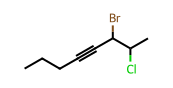
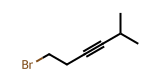
Name the alkynes.
Show answer and solution
(a) 3-bromo-2-chlorooct-4-yne, not 6-bromo-7-chlorooct-4-yne (2 < 6). (b) 1-bromo-5-methylhex-3-yne, not 6-bromo-2-methylhex-3-yne (1 < 2).
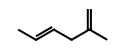
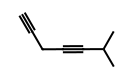
Name these compounds with two multiple bonds.

Show answer and solution
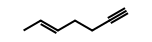
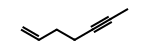
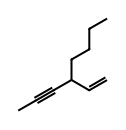
(a) propadiene (allene) (b) 2-methylhexa-1,4-diene (c) 6-methylhepta-1,4-diyne (d) hept-5-en-1-yne: lowest locant to the first multiple bond met, here the triple bond (1 < 2) (e) hept-1-en-5-yne (f) 3-butylhex-1-en-4-yne: the longest chain (8 C) does not hold both multiple bonds, so the parent is the six-carbon chain that does (rule of the older recommendations; the 2013 rules choose the longest chain, giving an octene name).
Name each enyne.


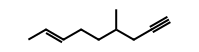
Show answer and solution
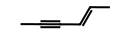
(a) hex-2-en-4-yne, not hex-4-en-2-yne: locants tie (2,4), so the double bond gets the lower number. (b) hex-1-en-5-yne (tie again, ene takes 1). (c) hept-1-en-6-yne. (d) 4-methylnon-7-en-1-yne: {1,7} beats {2,8}.