Nomenclature of Alcohols, Ethers, Aldehydes and Ketones questions: Solved examples: alcohols and ethers
6 questions, each with the answer and a worked solution under it. Try each one before you open the answer.
Name: (a) (b) (c) (d)
Show answer and solution
(a) propan-2-ol (b) butan-2-ol (c) 2-ethylpentan-1-ol: the longest chain (6 C) does not contain the C-OH, so the parent is the longest chain that does (5 C). (d) 3-butoxypropan-1-ol: the OH chain (3 C) is the parent; the four-carbon part becomes butoxy.
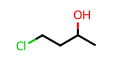
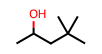
Name each compound.


Show answer and solution
(a) 3-bromopropan-1-ol (b) 4-chlorobutan-2-ol (c) 4,4-dimethylpentan-2-ol (d) 3-methylcyclohexan-1-ol, not 5-methyl: the suffix group gets C1, then the substituent gets the lowest number.
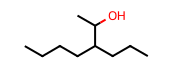
Choose the parent chain and number it.
Show answer and solution
The parent must contain the C bearing OH. Longest such chain: 7 C (through the butyl arm). Number from the end nearer the OH: OH on C2, propyl on C3. Name: 3-propylheptan-2-ol.
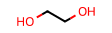
Name the diols.



Show answer and solution
(a) ethane-1,2-diol (b) propane-1,2-diol (c) butane-1,4-diol (d) cyclohexane-1,2-diol. With "diol", the final e of the alkane stays (ethane-, not ethan-).
Name: (a) (b) (c)
Show answer and solution
(a) butan-1-ol (b) propan-2-ol (c) 2-methylpropan-2-ol (tert-butyl alcohol).
Name the epoxides and the oxetane.
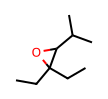
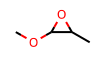
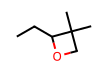

Show answer and solution
(a) 2,2-diethyl-3-(1-methylethyl)oxirane, or by the epoxy method 3,4-epoxy-4-ethyl-2-methylhexane. (b) 2-methoxy-3-methyloxirane (1,2-epoxy-1-methoxypropane); the original question shows the trans isomer. (c) 2-ethyl-3,3-dimethyloxetane. (d) 1,2-epoxypropane (methyloxirane). In oxirane names the O is atom 1.