Degree of Carbon, Hydrogen, Alcohol and Amine: practice set 2 of 2
Degree of Carbon, Hydrogen, Alcohol and Amine questions: Worksheet 1
1 question, each with the answer and a worked solution under it. Try each one before you open the answer.
Count the 1, 2, 3, 4 carbons and the 1, 2, 3 hydrogens.
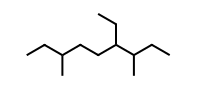
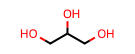

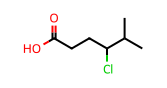

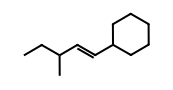
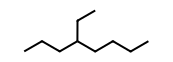
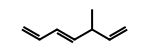
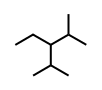

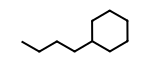
1
Fill the table, then open the answer.
Show answer and solution
| No. | 1C | 2C | 3C | 4C | 1H | 2H | 3H |
|---|---|---|---|---|---|---|---|
| 1 | 5 | 5 | 3 | 0 | 15 | 10 | 3 |
| 2 | 2 | 1 | 0 | 0 | 4 | 1 | 0 |
| 3 | 2 | 5 | 0 | 1 | 6 | 9 | 0 |
| 4 | 3 | 3 | 1 | 0 | 6 | 5 | 1 |
| 5 | 1 | 3 | 1 | 0 | 3 | 3 | 1 |
| 6 | 2 | 8 | 2 | 0 | 6 | 14 | 2 |
| 7 | 3 | 6 | 1 | 0 | 9 | 12 | 1 |
| 8 | 3 | 4 | 1 | 0 | 7 | 4 | 1 |
| 9 | 5 | 1 | 3 | 0 | 15 | 2 | 3 |
| 10 | 0 | 4 | 0 | 0 | 0 | 6 | 0 |
| 11 | 1 | 8 | 1 | 0 | 3 | 16 | 1 |
Note on 10 (cyclobutene): the original question's key gives 4 secondary H. All four carbons are 2 and carry 6 H in total (4 on the , 2 vinylic). The key in 5, 6 and 8 does count vinylic H, so 6 is the consistent answer. In 4, the COOH carbon is counted as 1 (one C neighbour).